Small businesses can cut costs by adopting sustainable practices that improve efficiency and reduce waste.
Introduction
In today’s rapidly evolving business landscape, sustainability is a strategic imperative for 2026. For small businesses, the journey towards greener operations might seem daunting, often perceived as an added expense. However, embracing sustainable practices can lead to significant green savings and a healthier bottom line. As we look towards 2026, the convergence of environmental consciousness and economic prudence presents an unprecedented opportunity for small businesses to thrive. This article explores how integrating eco-friendly strategies can reduce your environmental footprint, cut operational costs, and future-proof your enterprise. We’ll delve into actionable steps and practical insights, demonstrating that going green is exceptionally good for your business’s financial health in the 2026 economy.
What Is Sustainable Business Practice in 2026?
Sustainable business practice involves adopting processes that meet present needs without compromising future generations. It’s a holistic approach integrating environmental, social, and economic considerations into all operations. Key components include minimizing waste, conserving resources, and ensuring ethical labor practices. For small businesses in 2026, this means making conscious choices about energy consumption, supply chains, and employee well-being. Embracing these practices fosters long-term resilience, mitigates risks, and aligns your business with the growing demand for responsible commerce, creating value for all stakeholders and the planet.
Why Green Savings Matters for Small Businesses in 2026
For small businesses, green savings extend far beyond environmental stewardship. Optimizing resource use significantly reduces operational costs, directly impacting profitability. Investing in energy-efficient technologies leads to substantial utility bill reductions, while effective waste management lowers disposal fees and can create new revenue streams through recycling.
Proactive sustainability also helps navigate complex 2026 regulatory compliance, avoiding costly penalties and positioning the business as a responsible entity. This commitment enhances brand reputation, attracting discerning consumers who favor eco-friendly businesses. Ultimately, embracing sustainable practices aligns with evolving customer expectations, reduces environmental impact, and secures a competitive advantage.
Practical Steps to Implement Green Savings in 2026
Boost Energy Efficiency for Immediate Savings
One of the most direct paths to green savings for small businesses lies in optimizing energy consumption. Simple yet effective changes can yield significant reductions in utility bills.
- LED Lighting Upgrades: Replacing traditional incandescent or fluorescent bulbs with LED lighting can cut lighting energy use by 75% or more, with a rapid return on investment.
- Smart Thermostat Installation: Programmable or smart thermostats can automatically adjust heating and cooling based on occupancy and time of day, preventing energy waste.
- Regular Energy Audits: Professional energy audits can identify hidden inefficiencies and recommend tailored solutions for your specific business operations in 2026.
- Optimizing Equipment Usage: Ensure equipment is turned off when not in use, or invest in energy-efficient models (e.g., Energy Star certified appliances).
Budget-Friendly Options: Simple habits like unplugging electronics at the end of the day, maximizing natural light, and ensuring proper insulation can make a noticeable difference without significant upfront costs.
Examples: A small independent coffee shop in London reduced its electricity bill by 30% after switching to LED lighting and installing a smart thermostat, demonstrating tangible green savings.
Master Waste Reduction and Circularity
Minimizing waste is another critical area where small businesses can achieve substantial green savings while reducing their environmental footprint. Embracing circular economy principles can transform waste into valuable resources.
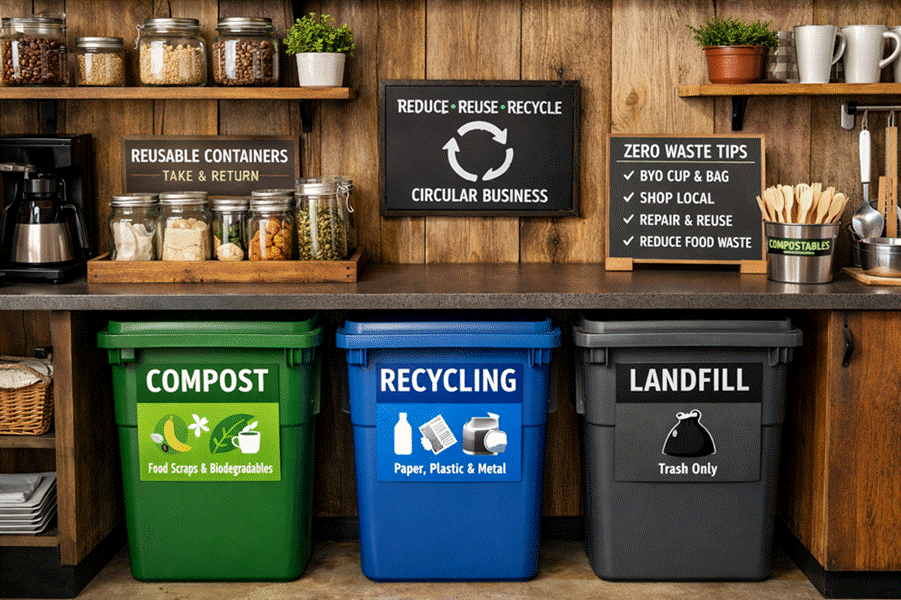
- Implementing Comprehensive Recycling Programs: Clearly labeled bins for paper, plastic, glass, and organic waste make it easy for employees and customers to participate.
- Reducing Single-Use Plastics: Switching to reusable alternatives for packaging, cutlery, and containers can significantly cut procurement costs and waste disposal fees.
- Composting Organic Waste: For businesses with food waste (e.g., restaurants, cafes), composting can reduce landfill contributions and potentially create nutrient-rich soil.
- Digitalizing Documentation: Moving from paper-based records to digital systems reduces paper consumption, printing costs, and storage needs.
- Exploring Circular Economy Principles: Adopt a “repair, reuse, recycle” ethos. Can your product components be reused? Can packaging be returned and refilled? This approach can open new revenue streams and reduce material costs.
Budget-Friendly Options: Encourage employees to bring reusable coffee cups and water bottles, partner with local organizations for upcycling materials, and buy supplies in bulk to reduce packaging.
Examples: A small artisan workshop started using reclaimed wood for its products and implemented a system for collecting and reusing sawdust, drastically cutting waste disposal costs and creating unique product lines.
Optimize Your Supply Chain with Sustainable Sourcing
Your supply chain offers numerous opportunities for green savings and enhanced sustainability. Strategic sourcing can reduce transportation costs, support local economies, and minimize environmental impact.
- Partnering with Local Suppliers: Sourcing materials and products locally reduces transportation emissions and supports the local economy, often leading to fresher produce or quicker delivery times.
- Choosing Suppliers with Environmental Certifications: Prioritize suppliers who demonstrate a commitment to sustainability through certifications (e.g., Fair Trade, organic, FSC-certified wood).
- Reducing Transportation Emissions: Consolidate orders, optimize delivery routes, or explore suppliers who use electric vehicles for delivery.
Budget-Friendly Options: Negotiate with local eco-friendly vendors for bulk discounts, and consider forming purchasing cooperatives with other small businesses to leverage buying power.
Examples: A small independent bookstore began sourcing its books from publishers committed to sustainable paper production and local distributors, reducing its carbon footprint and appealing to environmentally conscious readers.

Conserve Water and Reduce Utility Bills
Water conservation is another often-overlooked area where small businesses can realize green savings and contribute to environmental protection.
- Installing Low-Flow Fixtures: Upgrading toilets, faucets, and showerheads (if applicable) to low-flow models can significantly reduce water consumption without impacting performance.
- Monitoring Water Usage: Regularly checking water bills and conducting periodic checks for leaks can help identify and address inefficiencies promptly.
- Rainwater Harvesting (where applicable): For businesses with outdoor spaces or specific water needs (e.g., gardening, non-potable uses), rainwater harvesting systems can provide a free, sustainable water source.
Budget-Friendly Options: Educate employees on water-saving habits, such as turning off taps when not in use and reporting leaks immediately.
Leverage Green Technology and AI for Efficiency in 2026
The advent of green technology and artificial intelligence (AI) offers innovative avenues for small businesses to achieve green savings and operational efficiency.
- Implementing AI-Powered Energy Management Systems: AI can analyze energy consumption patterns, predict demand, and optimize HVAC and lighting systems, leading to significant energy savings.
- Using Cloud-Based Solutions: Migrating to cloud services can reduce the need for on-premises servers, thereby lowering energy consumption and IT infrastructure costs.
Budget-Friendly Options: Explore free or affordable digital tools for process optimization, inventory management, and remote collaboration, which can indirectly reduce resource consumption.
Real-World Examples of Small Businesses Achieving Green Savings
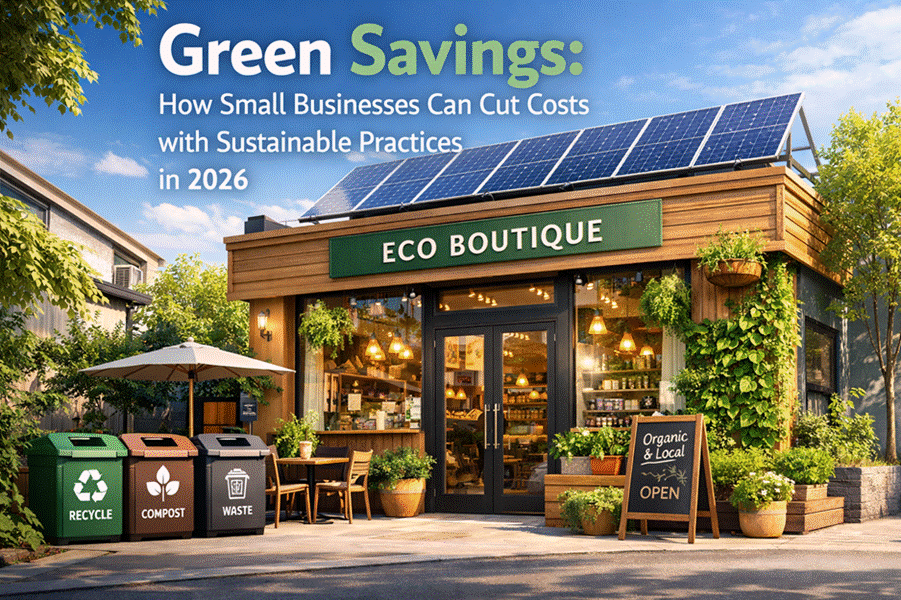
- Small Shops: “The Eco Boutique,” a clothing store, implemented LED lighting, reduced its packaging to recycled paper bags, and sourced garments from ethical, sustainable manufacturers. This led to a 20% reduction in electricity costs and a 15% increase in customer loyalty due to its strong green credentials.
- Restaurants: “Harvest & Hearth,” a farm-to-table restaurant, significantly reduced food waste through precise inventory management, composting all organic scraps, and donating surplus food. They also installed low-flow kitchen fixtures, resulting in a 25% decrease in water bills and a notable improvement in their local community standing.
- Workshops: “Crafted Sustainably,” a furniture workshop, switched to sustainably harvested wood and non-toxic finishes. They also optimized their cutting processes using software to minimize material waste, leading to a 10% reduction in raw material costs and attracting a niche market of eco-conscious consumers.
- Local Businesses: Across various sectors, local businesses are finding innovative ways to go green. A local print shop transitioned to recycled paper and soy-based inks, while a small consulting firm implemented a remote-work policy, drastically cutting down on office energy consumption and employee commute emissions.
Common Mistakes Businesses Make on Their Green Journey
While the path to green savings is rewarding, small businesses often encounter pitfalls. Avoiding these common mistakes can ensure a smoother, more effective transition:
- Greenwashing: Making unsubstantiated or misleading claims about environmental practices. Authenticity is key; consumers are quick to spot insincere efforts.
- Ignoring Employee Engagement: Sustainability initiatives are most successful when employees are informed, involved, and empowered to contribute. Lack of engagement can lead to poor implementation.
- Failing to Measure Impact: Without tracking key metrics (e.g., energy consumption, waste generated, carbon footprint), it’s impossible to assess the effectiveness of initiatives or demonstrate green savings.
- Overlooking Government Incentives: Many governments offer grants, tax breaks, or subsidies for businesses adopting sustainable technologies or practices in 2026. Failing to explore these can mean missing out on significant financial support.
- Focusing Solely on Compliance without Seeking Cost Savings: While compliance is essential, viewing sustainability merely as a regulatory burden rather than an opportunity for efficiency and cost reduction limits its potential benefits.
Tools and Resources for Sustainable Small Businesses in 2026
To aid small businesses in their pursuit of green savings and sustainable operations, numerous tools and resources are available:
- Carbon Footprint Tools: Online calculators and software (e.g., Carbon Trust Footprint Calculator, GHG Protocol) help businesses measure and understand their emissions.
- Waste Audit Frameworks: Guides from environmental agencies or consultancy firms provide structured approaches to assessing and improving waste management practices.
- ESG Reporting Tools: Simplified templates or platforms designed for SMEs can help track and report on environmental, social, and governance performance, enhancing transparency.
- Government Grants & Programs: In the UK, schemes like the Green Heat Network Fund or various local council grants offer financial assistance for green initiatives. Businesses should research specific programs relevant to their region and industry.
- Sustainability Consultants: For tailored advice and implementation support, engaging with sustainability consultants like GreenFuturePath can provide expert guidance, especially for navigating complex regulations or developing comprehensive strategies.
How Sustainability Improves Business Growth and ROI
The ultimate benefit of embracing sustainable practices is not just green savings but also enhanced business growth and a strong return on investment (ROI). The financial advantages are clear:
- Cost Reduction: As highlighted, savings from energy efficiency, waste reduction, and optimized supply chains directly improve profit margins.
- Competitive Advantage: Differentiating your brand as environmentally responsible can attract a growing segment of eco-conscious consumers and talent, setting you apart from competitors.
- Brand Trust & Loyalty: A genuine commitment to sustainability builds trust and fosters deep customer loyalty, leading to repeat business and positive word-of-mouth.
- Investor Interest: There’s a rising trend of impact investing, where investors seek businesses with strong ESG performance. Demonstrating sustainability can attract new funding opportunities.
- Employee Attraction & Retention: Employees, particularly younger generations, are increasingly seeking purpose-driven work. A sustainable business culture can attract top talent and reduce turnover.
Implementation Guide: A 30-60-90 Day Roadmap
Turning sustainability ideas into measurable savings works best when the work is phased. A simple roadmap keeps the team focused and prevents the common mistake of trying to change everything at once.
- Days 1-30: Run a baseline audit. Capture utility bills, waste invoices, packaging costs, and transport spend. Identify the three biggest cost drivers and the three easiest wins.
- Days 31-60: Pilot improvements such as LED retrofits, waste segregation, low-flow fixtures, digital invoices, or supplier consolidation. Track results weekly so you can compare before and after.
- Days 61-90: Formalize the wins. Update procurement rules, train staff, refresh your sustainability policy, and set monthly targets for carbon, waste, water, and energy.
At the end of the first 90 days, publish a short internal report. A simple narrative of what changed, what it saved, and what should happen next creates momentum and makes future improvements easier to approve.
Case Study 1: The Café That Cut Waste and Lifted Margins
A neighborhood café was spending heavily on food waste, disposable cups, and energy use. The owner introduced a waste log, switched to reusable dine-in serviceware, and negotiated smaller, more frequent deliveries with suppliers. Within a few months, the café reduced spoiled inventory, improved portion control, and lowered waste-hauling fees. The result was not just a smaller environmental footprint but a more stable and predictable cost structure.
The key lesson is that sustainability works best when it is tied to an operational problem already felt by the business. In the café’s case, the pain point was margin pressure. The sustainability solution improved both the planet and the balance sheet.
Case Study 2: The Office That Rebuilt Its Procurement Rules
A professional services office with 18 employees wanted to reduce its environmental impact without disrupting client work. It began by revising procurement standards: recycled paper only when printing was unavoidable, refillable stationery, energy-efficient laptops, and suppliers with clear waste and emissions policies. The office also added a hybrid-work policy to reduce commuting and trimmed unnecessary printing. Over time, these changes reduced overhead and gave the leadership team a clearer story to tell clients who cared about ESG performance.
Practical Checklist: Your Monthly Sustainability Review
Use this checklist at the end of each month to keep improvements on track and to identify new opportunities.
- Review electricity, gas, water, and waste bills.
- Compare actual spend with last month and the same month last year.
- Check whether any supplier contracts can be consolidated or renegotiated.
- Measure waste by stream: general, recycling, food, and hazardous.
- Verify that staff training or signage is still visible and understood.
- Record one quick win and one longer-term improvement action.
- Share a short update with the team so progress stays visible.
Downloadable Resource: Carbon Footprint and Waste Reduction Templates
To make the work easier, create two simple internal templates. First, a carbon footprint tracker that captures monthly energy use, mileage, commuting, freight, and purchasing. Second, a waste reduction plan that records what is being thrown away, why it is happening, what it costs, and which intervention will reduce it. These templates do not need to be complicated. The best version is one your team will actually use.
If you offer these tools as downloadable PDFs or spreadsheets on your site, they can also serve as lead magnets. Visitors searching for practical sustainability support are often looking for something they can use immediately, so a useful template can strengthen trust and increase engagement.
Guest Expert Spotlight: Why External Voices Matter
Thought leadership grows stronger when it includes voices beyond the company itself. Consider adding short interview-style sections with an energy auditor, a waste consultant, a procurement specialist, or a local sustainability champion. A guest perspective can validate your recommendations, add nuance, and make the article more credible to readers who want more than general advice.
For example, an energy consultant might explain why low-cost operational changes often outperform expensive technology upgrades in the first year. A waste specialist might discuss contamination in recycling streams. A procurement expert could share how to write greener supplier criteria without overcomplicating purchasing decisions.
Final Thoughts
The journey towards sustainability for small businesses is a powerful one, offering a dual benefit of environmental stewardship and significant green savings. As we move into 2026, the imperative to adopt eco-friendly practices will only grow stronger, driven by consumer demand, regulatory pressures, and the undeniable economic advantages. Every step, no matter how small, contributes to a more resilient, profitable, and responsible future for your business and the planet. Embrace the green path, and watch your savings grow.
You Too Can Benefit
If your business is looking to reduce its environmental impact while improving efficiency, exploring practical sustainability strategies is a great place to start. Visit greenfuturepath.com for tailored consulting and environmental guidance to help your organization thrive sustainably.
Suggested Links
- Sustainability Consulting Services
- Environmental Guidance Resources
- Navigating the Green Maze: A Small Business Guide to Environmental Compliance in 2026
Discover more from Greenfuturepath
Subscribe to get the latest posts sent to your email.