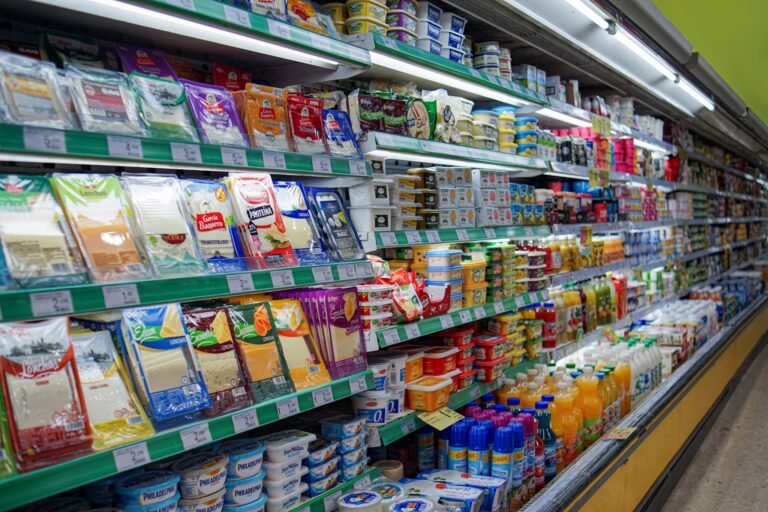

What you eat is one of the largest single levers you have over your personal environmental footprint — bigger than your light bulbs, your recycling, and in many cases your car. Food systems generate roughly a quarter to a third of global greenhouse gas emissions, and the difference between a high-impact diet and a low-impact one can be several tonnes of CO₂e per person per year.
But sustainable eating advice is usually served as guilt with no practical guidance: go vegan, buy organic, never touch plastic. This guide is the practical version — what actually matters, ranked by impact, with changes you can start at your next meal.
First, Understand What Drives Food’s Footprint
Here’s the insight that rearranges most people’s priorities: what you eat matters far more than where it comes from. Transport is a surprisingly small slice of food emissions for most products — often under 10%. The dominant factors are land use, farming methods, and (for animal products) the animals themselves.
That means the local beef burger can easily out-emit imported lentils several times over. Food miles are visible and intuitive; methane from cattle is invisible and enormous. Sustainable eating starts by fixing your intuitions on that point.
The Impact Ladder: Foods Ranked
Per kilogram of food, the rough emissions hierarchy looks like this:
- Highest impact: beef and lamb (ruminant animals produce methane) — often 20–60+ kg CO₂e per kg, dwarfing everything else
- High: cheese and other dairy, farmed shrimp, coffee and chocolate (land use)
- Medium: pork, poultry, eggs, farmed fish, rice
- Low: most vegetables, fruits, grains, legumes, nuts
- Lowest: lentils, beans, root vegetables, seasonal field-grown produce
The pattern: the ladder is dominated by one rung. Beef and lamb sit so far above everything else that what you do about red meat matters more than every other food decision combined. Keep that hierarchy in mind as the changes below come at you — it’s what separates the moves that transform your footprint from the ones that merely make you feel busy.
The Seven Changes That Actually Matter (Ranked)
1. Cut ruminant meat first — beef and lamb
You don’t have to eliminate it. Replacing beef with chicken or plant proteins a few times a week cuts the food footprint of those meals by 70–90%. If you do only one thing from this guide, do this.
2. Waste less food
Food you throw away carries its entire production footprint to the landfill, where it generates methane as it rots. Roughly a fifth to a third of household food is wasted — meal planning and a leftovers habit are climate actions, as our budget sustainable living guide shows they’re money-savers too.
3. Make plants the center of more meals
Not a purity test — a ratio shift. Beans, lentils, chickpeas, and grains are among the lowest-impact and cheapest foods on Earth. Three or four plant-centered dinners a week is a transformation most households barely notice after a month.
4. Choose poultry and pork over beef when you do eat meat
Within the meat category, the spread is enormous: pork and poultry typically carry a fraction of beef’s footprint. “Less and better” beats “none, briefly, then giving up.”
5. Eat seasonal and field-grown where possible
Air-freighted produce (very perishable items flown long distances) and heated-greenhouse produce (out-of-season tomatoes in cold climates) punch far above their weight. Seasonal field-grown alternatives taste better anyway.
6. Rethink the big dairy habits
Cheese sits surprisingly high on the ladder. You don’t need to quit — but treating cheese as a garnish rather than a main ingredient, and swapping some dairy milk for lower-impact alternatives, shifts real numbers over a year.
7. Buy certified where certification means something
For coffee, chocolate, palm oil, and seafood — products with genuine deforestation and overfishing footprints — credible certifications (Rainforest Alliance, Fairtrade, MSC) do meaningful work. Everywhere else, be alert for marketing that outruns reality.
The Myths That Distract People
- “Local is always greener.” Usually not — production dominates transport for most foods. Local beef still out-emits shipped beans by a wide margin.
- “Organic is the big win.” Organic has real benefits (soil, biodiversity, pesticides), but for climate specifically it’s often comparable to or slightly better than conventional — it’s not the transformation the red-meat swap is.
- “It has to be all or nothing.” Half-measures sustained beat perfect weeks abandoned. The math of “meat-free weekdays” beats “vegan for January” every time.
- “Sustainable eating costs more.” The core moves — fewer animal products, less waste, more legumes and seasonal produce — are the cheapest way to eat in most of the world.
A One-Week Starter Plan
- Day 1–2: Take stock — how many of your weekly meals center red meat? That’s your number to shrink.
- Day 3: Learn two plant-centered recipes you genuinely like (a dal, a bean chili, a peanut stir-fry). Two is enough to start.
- Day 4–5: Swap beef for chicken or a legume in two regular meals.
- Day 6: Plan next week’s dinners and shop to the list — the waste habit starts here.
- Day 7: Do a fridge sweep: what needs eating in the next 48 hours? Build a meal around it.
Sustainable Eating on a Tight Budget
The dirty secret of sustainable food advice is that it often assumes a Whole Foods budget. Reality check: the lowest-impact foods on the ladder — lentils, beans, chickpeas, rice, seasonal vegetables — are also the cheapest calories on Earth. The expensive traps are the substitute products: premium plant-based meats, imported superfoods, organic-branded everything. You don’t need any of them. A pot of bean chili beats a boutique vegan burger on footprint, price, and usually nutrition. Build meals around the cheap low-impact staples, treat meat as a smaller component rather than the centerpiece, and your grocery bill drops alongside your footprint — the same money-and-planet alignment we covered in budget sustainable living.
“But Where Do You Get Your Protein?”
Every plant-curious eater hears this question, and it deserves a straight answer: protein deficiency is essentially nonexistent among people eating enough calories and a reasonably varied diet. Beans, lentils, chickpeas, tofu, tempeh, eggs, dairy, grains, and nuts all deliver protein in abundance — a cup of cooked lentils carries roughly 18 grams. Most adults in wealthy countries already eat substantially more protein than they need. You don’t need to track grams or combine special foods at every meal; you need variety across the week, which a rotation of bean chili, lentil soup, egg dishes, and tofu stir-fries supplies without any thought. The athletes thriving on plant-forward diets aren’t surviving despite them.
Eating Out Without Undoing Your Week
Restaurant meals concentrate impact: large portions, red-meat-heavy menus, and serious food waste. Three habits keep dining out compatible with your goals: choose the chicken, fish, or plant option over the beef and lamb ones (same ladder as home); treat shared plates or smaller portions as the default (restaurant portions in many countries run 1.5–2× what you’d serve yourself); and take the leftovers home — the doggy bag is a sustainability practice, not an embarrassment. You don’t need to interrogate the waiter about sourcing at every meal; the menu choices already do most of the work.
Reading Labels: The Two Minutes Version
Ignore the front of the package — that’s advertising. The meaningful signals: country of origin (for transport-sensitive items), credible certifications on the products where they matter (coffee, chocolate, seafood, palm oil), and the ingredient list itself — a long list of unrecognizable inputs usually means a long supply chain too. Everything else — green fonts, farm imagery, “natural” claims — is the packaging equivalent of the tricks we catalogued in our greenwashing coverage.
Frequently Asked Questions
Do I have to go vegan to eat sustainably?
No. A fully plant-based diet has the lowest footprint, but the biggest single step — cutting beef and lamb — is available to everyone, and a “less and better” meat approach captures most of the benefit. Direction matters more than purity.
Is chicken really that much better than beef?
Yes — per kilogram, beef’s footprint is typically many times chicken’s, mainly because cattle produce methane and require vastly more land and feed per unit of meat. It’s the highest-leverage single swap in most diets.
What about plant-based meat alternatives?
They typically carry a fraction of beef’s footprint (though more than whole-food legumes). They’re a useful transition tool for people who want the familiar experience — just read them as processed food and price them accordingly.
Is eating fish sustainable?
It varies enormously by species and method — some fisheries are well-managed, others are collapsing, and some farmed options are efficient while others strain ecosystems. Guides like the MSC label and regional seafood-watch lists make specific choices easy.
The Bottom Line
Sustainable eating isn’t a diet — it’s a set of defaults: less red meat, more plants, minimal waste, seasonal where easy. Nail those four and you’ve captured the large majority of what food choices can do for the planet, while probably spending less and eating better than before. Start with the red-meat swap this week — it’s the biggest single move most households will ever make.
Discover more from Greenfuturepath
Subscribe to get the latest posts sent to your email.