
When people think about their environmental footprint, they picture smokestacks and exhaust pipes. Almost nobody pictures their shower. Yet your water footprint is one of the most consequential and most invisible parts of your household’s impact — and in a world where water stress affects billions of people, it matters far beyond your utility bill.
Here’s the twist: most of your water footprint isn’t the water coming out of your taps. But the tap water you can see is the easiest place to start — and it’s directly linked to your energy use, your bills, and your local water security. These 10 changes cut it significantly, starting with the free ones.
First, Understand Your Two Water Footprints
Direct water is what you see: showers, laundry, cooking, flushing, the garden. An average person in a high-income country uses 100–200+ liters of it daily at home.
Indirect (virtual) water is what’s hidden in everything you buy: roughly 2,700 liters for one cotton t-shirt, 15,000+ liters per kilogram of beef, 130+ liters for a single cup of coffee. Your indirect footprint dwarfs your direct one — often 50 to 100 times larger. That doesn’t make the tap fixes pointless; it means you should treat them as the fast wins they are while the bigger dietary and shopping shifts compound in the background. We’ll attack both, starting where the meter runs.
Cutting Your Direct Footprint: The Home Fixes
1. Shorten showers by two minutes
Showers are the biggest indoor water user in most homes — a standard head runs 10–15 liters per minute. Cutting two minutes saves 20–30 liters per shower; for a family, that’s tens of thousands of liters a year. A shower timer (or a four-minute song) makes it a game instead of a sacrifice.
2. Fit low-flow fixtures
A low-flow showerhead cuts shower water use by 30–50% while keeping pressure satisfying — modern designs aerate the stream so you genuinely don’t notice. Faucet aerators cost a couple of dollars each and screw on in minutes. Payback is measured in weeks.
3. Fix every leak — including the silent ones
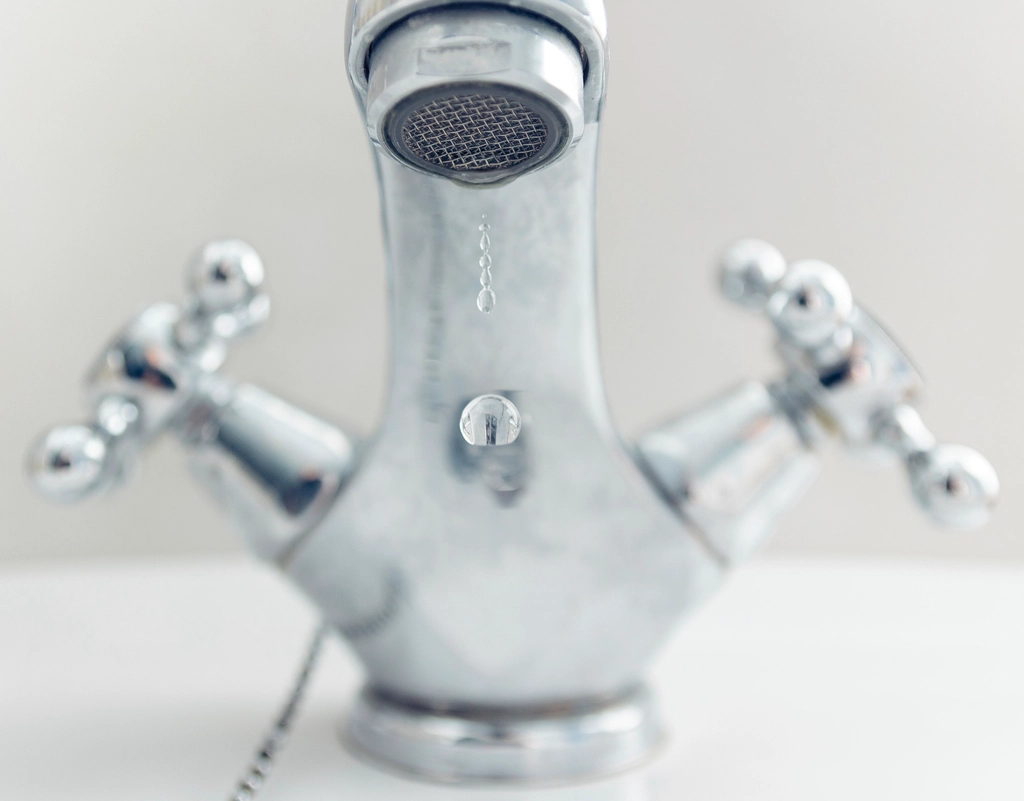
A dripping tap wastes thousands of liters a year; a silently leaking toilet flapper can waste hundreds of liters per day. Test toilets with food coloring in the tank — color in the bowl after 15 minutes without flushing means a leak. Most fixes are a $5 part and a YouTube video.
4. Run full loads only
Your washing machine and dishwasher use roughly the same water and energy whether half-full or full. Waiting for full loads can cut laundry and dishwashing water by a third — and modern dishwashers typically use less water than hand-washing the same load, especially in eco mode.
5. Stop treating the tap as default
Small reflexes add up to thousands of liters: turn off the tap while brushing teeth or shaving (saves 20+ liters per session), keep a jug of drinking water in the fridge instead of running the tap cold, and use a basin for washing vegetables rather than running water.
6. Rethink the garden
Outdoor use can exceed everything indoors combined in dry seasons. Water early morning or evening (evaporation peaks midday), water deeply but less often to encourage deep roots, mulch beds to lock moisture in, and choose native or drought-tolerant plants that thrive on your climate’s natural rainfall. A rain barrel turns your roof into free irrigation.
Cutting Your Indirect Footprint: The Bigger Prize
7. Shift your diet’s water intensity
The water hierarchy of food mirrors its carbon hierarchy: ruminant meat sits at the top by an enormous margin — a kilogram of beef can embody 50+ bathtubs of water through feed production. Shifting a few weekly meals from beef to poultry, pork, or legumes saves more “water” than months of shorter showers. Our sustainable eating guide walks through the swaps.
8. Waste less food
Every item binned takes its entire water footprint with it — throwing away a hamburger wastes the water of a month of showers. Meal planning and leftovers are water conservation, performed in your kitchen instead of your bathroom.
9. Buy fewer, longer-lasting clothes
The cotton in a single t-shirt can embody ~2,700 liters, much of it in water-stressed regions. Buying fewer, better garments — and shopping secondhand — is among the most water-positive purchases you can not-make. The full picture is in our fast fashion guide.
10. Let appliances do double duty for energy
Water and energy are twins: heating water is one of your home’s biggest energy uses, so every liter of hot water saved cuts both footprints at once. Cold-wash laundry, eco dishwasher settings, and the water heater temperature dial from our home energy guide are water measures as much as energy ones.
How to Measure Your Progress
Your water meter is the honest referee. Find it (usually near the street or where the main enters your home), read it, then read it again a week later — that’s your household baseline. Re-check monthly as you implement changes. Watching the cubic meters drop is oddly addictive, and it catches leaks early too: a meter that moves when every tap is off is a leak announcing itself.
For Renters: No Plumbing Required
Every tip above works in a rental — but these are especially for you: screw-on faucet aerators and a low-flow showerhead are reversible five-minute swaps (keep the originals in a drawer and reinstall when you move out); the toilet leak test is free and the flapper is usually a tenant-legal fix; and a washing-up bowl in the sink cuts dish-rinsing water dramatically without touching a pipe. What you can’t change — ancient appliances, an irrigation-hungry lawn — is a conversation with your landlord, armed with the argument that efficiency upgrades raise their property’s value and cut bills they or future tenants pay.
The Next Level: Greywater and Rainwater
Once the basics are habits, two systems multiply your savings. Rainwater harvesting scales from a single barrel under a downspout (free garden irrigation all season) to full tank systems for toilet flushing and laundry where local codes allow. Greywater reuse — redirecting relatively clean water from showers, baths, and laundry to irrigation — can cut household water demand by a third, though it needs proper setup: biodegradable soaps, subsurface distribution, and compliance with local regulations, which vary widely. Neither is a beginner project, but both are the difference between trimming your footprint and structurally redesigning it.
The Numbers: What These Changes Are Actually Worth
Run the math for a family of four in a metered home. Two minutes off daily showers: ~40,000 liters a year. A low-flow showerhead: another 20–30% off the remainder. A fixed toilet leak: up to 70,000+ liters a year for a bad flapper. Full-load laundry habits: 10,000–15,000 liters. Combine the free fixes and you’re plausibly looking at 100,000+ liters annually — hundreds of dollars off combined water and energy bills in metered markets, and a meaningful dent in local water demand. Scale that across a neighborhood and it’s a reservoir; across a city, a treatment plant.
Your First Week: A Water-Saving Sprint
- Day 1: Find your water meter and record the baseline reading.
- Day 2: Run the food-coloring leak test on every toilet.
- Day 3: Set the shower timer — four minutes, household-wide.
- Day 4: Install aerators and, if you own, a low-flow showerhead.
- Day 5: Full loads only — retrain the laundry and dishwasher reflex.
- Day 6: Tap-off habits: teeth, shaving, veggie washing in a basin.
- Day 7: Re-read the meter and compare. That number is your motivation.
Frequently Asked Questions
Does saving water matter if I don’t live in a drought area?
Yes. Treating and pumping water takes energy (so every liter saved cuts emissions), and many regions face seasonal stress even in wet climates. Your indirect water footprint — the food and goods you buy — also connects you to water-stressed regions worldwide regardless of local rainfall.
What uses the most water in a typical home?
Usually showers and baths first, then toilets, then laundry — with outdoor irrigation leapfrogging everything in houses with gardens in dry seasons. Leaks can silently outrank them all.
Is it cheaper to save water?
Almost always. The free habits pay immediately on metered bills; low-flow fixtures pay back in weeks; and every hot-water saving is also an energy saving, so you’re cutting two bills with each change.
Does bottled water have a water footprint?
An ironic one, yes — producing the bottle and processing the water takes several liters of water per liter sold, before you count the plastic and transport. Where tap water is safe, drinking it is one of the easiest sustainability wins that exists.
The Bottom Line
Your water footprint splits into two games: the visible one at home — shorter showers, low-flow fixtures, fixed leaks, full loads — and the invisible one in your shopping basket, dominated by what you eat and wear. Win the first with a weekend of small fixes; win the second with the same food and clothing shifts that cut your carbon. Start with the shower timer and the toilet leak test this week — the cheapest water you’ll ever save is the liter you never used.
Discover more from Greenfuturepath
Subscribe to get the latest posts sent to your email.